


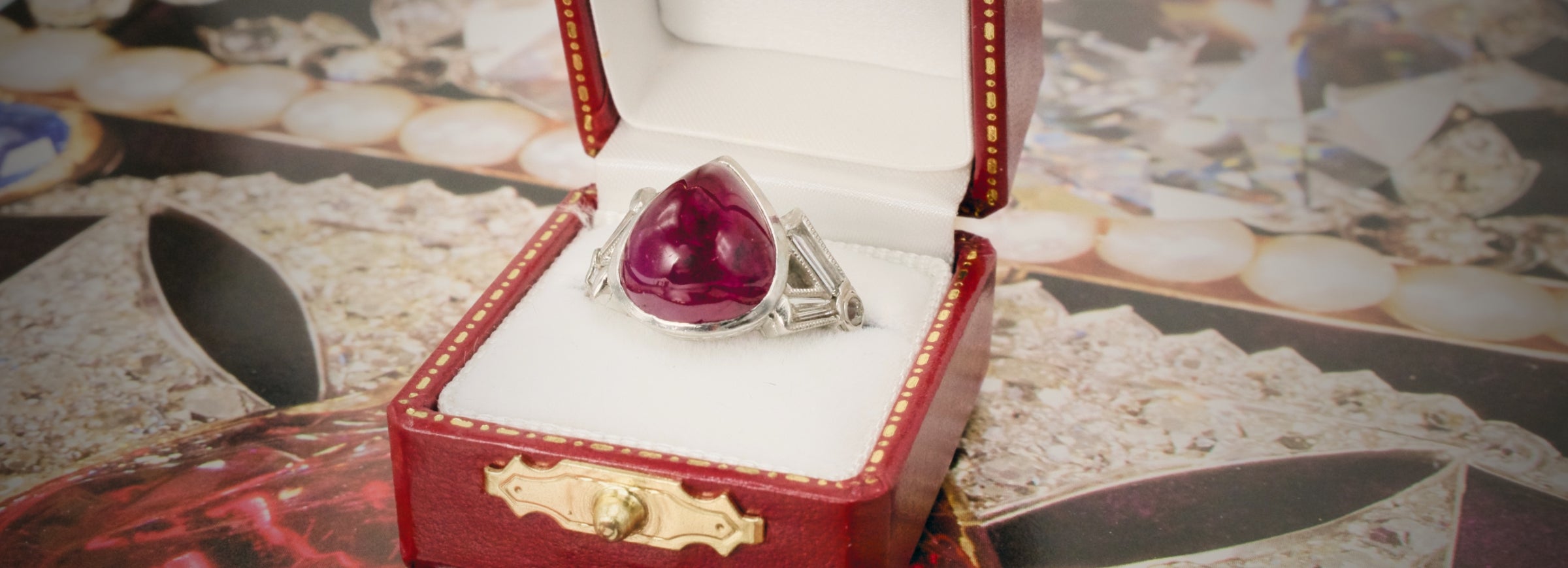
Ruby is the red variety of the mineral corundum (bonus: every other color of corundum is called sapphire!). For millennia, rubies have been prized for their romantic red color and until science was able to chemically distinguish the minerals, virtually all red stones were called rubies.
Believed to have been traded on the Silk Road as early as 200 B.C., the ancients believed that rubies' red color was derived from an internal source of source of heat and that the stone would grant them protection in battle and, perhaps, invincibility. They are still sought after as a symbol of love, passion, and prosperity.
Rubies are the birthstone of July and are a traditional gift for both the 15th and 40th wedding anniversaries.
 Hardness
One of the hardest gemstones available — virtually scratch-proof under normal wear conditions. Can be safely stored alongside other stones, but may damage them as most gems are softer.
The Mohs scale rates a gem's scratch resistance from 1 (softest) to 10 (hardest). Read more about the Mohs scale and why durability isn't just about hardness.
 Care Instructions
 Points of Interest